
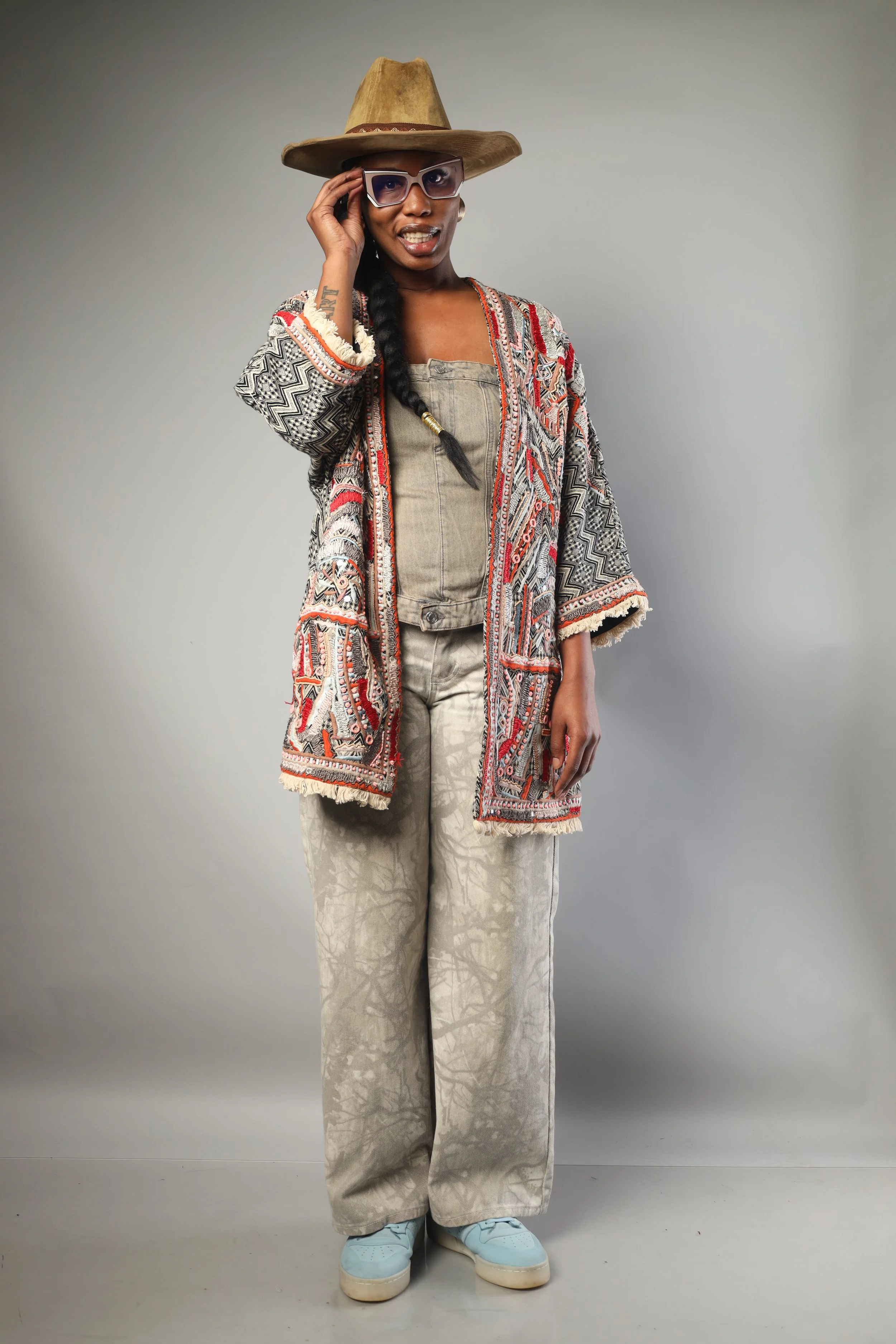
Artist’s Bio
Kiara "K. Medulla" Nicholas iis the founder of K. Medulla Studios, an Atlanta-based creative practice spanning original Afrofuturist artwork, graphic design, and curatorial projects. Her work turns storytelling into shared cultural experience. Her material-driven, mixed-media masks layer African aesthetics, spiritual symbolism, and contemporary culture to explore resilience and transformation.
She holds a BFA in Graphic Design from The University of West Georgia and an Associate of Arts from Gordon State College. In 2014, she was a semi-finalist for the Adobe Design Achievement Awards for her book cover design for Girl Interrupted. Her work has been shown across Atlanta, including Metropolitan State College, Alpharetta Arts Center, and the Emma Darnell Aviation Museum & Conference Center. She was also cited in Juel Ables's 2023 Georgia State University thesis on art therapy and creative expression.
As a curator, she views art as a tool for connection, empowerment, and change. She co-founded Sip Museum in Atlanta's Adamsville neighborhood, a hub for art showcases, podcasts, cultural gatherings, and holistic events, designing its marketing materials and campaigns across email, print, and digital media. She collaborated with organizations including The Chad Livsey Project, Atlanta Public Schools, Rap Snacks, Ape Water, and Divine Libations, connecting emerging artists with community and entrepreneurial opportunities through workshops and community-based projects like "Clean Yo Hood." In 2023, she completed the Pinterest & CKS Creator Residency at Cam Kirk Studio, developing content strategy and working with AI tools in her creative process.
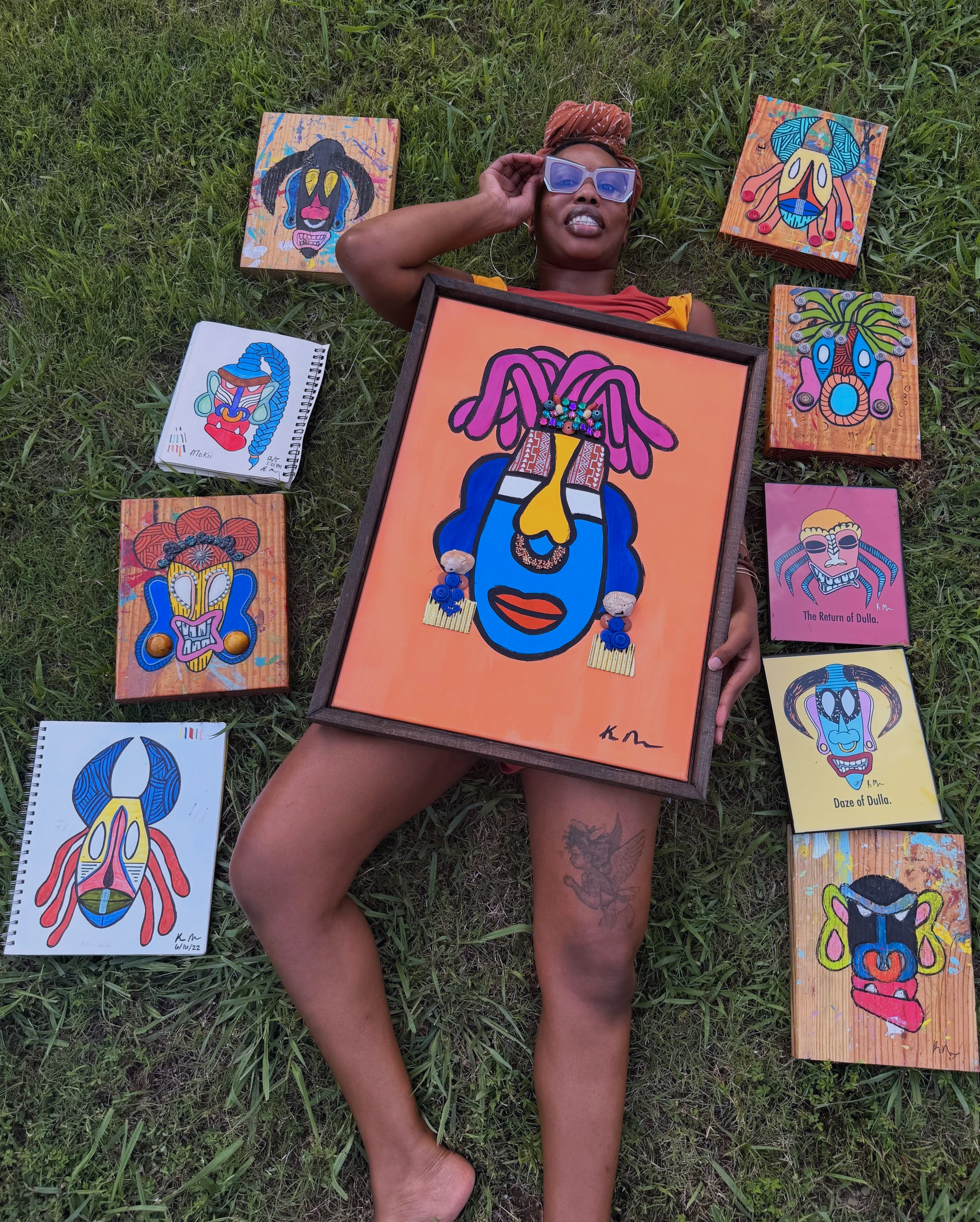
Artist Statement
My practice is rooted in an inherited tradition of making. I come from a family of seamstresses, woodworkers, and carpenters. Material, to me, isn't decoration — it's inheritance. It's a way of thinking that was passed down before I had language for it. This understanding shapes my Afrofuturist mask work. Through mixed-media forms, I reimagine Black identity across time, layering African aesthetics, spiritual symbolism, and contemporary material culture. Some materials I used such as wood, resin, beads, shells, fibers, and found objects become narrative devices in this work. Each one carries memory, the way an artifact carries history.
Recent genealogical research traced my lineage to West Africa; Nigeria and the Benin/Togo region. This discovery reframed my practice. My masks don't replicate specific traditional forms. They're an intuitive, speculative response — shaped by inherited memory and diasporic resonance. Each mask becomes a technology: a vessel where ancestral knowledge, spirituality, and imagined futures converge. Through this work, I ask how cultural knowledge is inherited, transformed, and carried forward. I see Blackness not as fixed, but as expansive — a continuum still being written.

Behind The Materials
My relationship with materials didn't start in one place. It started in a lot of small ones — a museum visit, a college classroom, a family living room. I remember walking through the High Museum in high school and stopping at the African masks. I didn't have language for why they stayed with me. I just knew they did.
That curiosity followed me into college, where it turned into something I could actually act on. I took classes such as as printmaking, ceramics, watercolor; which put new materials in my hands. Each one taught me something different about texture, process, and patience, and that's where my instinct for tactile, labor-intensive making really took hold.
My graphic design background shows up here too, even if it's less obvious — years of studying color theory and composition shaped how I choose a palette before I even pick up a material. Nature plays its own role alongside that instinct. Leaves, crystals, and floral elements aren't just visual choices; they come from a personal connection to the natural world that's been part of my life long before it became part of my art. Grounding a piece in something organic feels honest to me, even when the rest of the work is imagining a speculative future.
Then there's glitter and metallics — the materials that give a piece its shine, its presence, its sense of being crowned rather than just finished. Every material here is doing its own job. Together, they build a language I'm still learning to speak fluently.